
Alcohol Withdrawal Timeline: What to Expect During the First 72 Hours and Beyond
Experiencing alcohol withdrawal symptoms or planning to stop drinking? Talk with the DevotedDOc team.
Stopping alcohol after prolonged heavy drinking can be an important step toward recovery, but it may also trigger withdrawal symptoms that range from mild discomfort to life-threatening medical emergencies. Understanding the alcohol withdrawal timeline can help you recognize what symptoms may occur, when they typically appear, and when immediate medical care is necessary.
For many people, symptoms begin within several hours after their last drink, often becoming more intense over the next one to three days. While some individuals experience mild anxiety or tremors, others may develop seizures or delirium tremens (DTs), a severe form of alcohol withdrawal that requires emergency treatment. Knowing what to expect can help you seek the right level of care and avoid potentially dangerous complications.
What Is Alcohol Withdrawal?
Alcohol withdrawal is a group of physical and psychological symptoms that can occur when someone who has been drinking heavily for an extended period suddenly stops or significantly reduces their alcohol intake. It most commonly affects people with alcohol use disorder (AUD), although anyone who has developed physical dependence on alcohol may experience withdrawal.
Alcohol affects the brain by slowing activity in the central nervous system. Over time, the brain adapts to alcohol’s depressant effects by increasing signals that keep the nervous system active. As long as alcohol is present, these opposing effects remain relatively balanced. However, when alcohol is suddenly removed, the brain cannot adjust immediately. This temporary imbalance causes the nervous system to become overactive, leading to withdrawal symptoms such as anxiety, tremors, sweating, increased heart rate, insomnia, and, in more severe cases, seizures or delirium.
It’s important to understand that alcohol withdrawal is different from a hangover. A hangover usually develops after occasional heavy drinking and typically causes symptoms such as headache, fatigue, nausea, and dehydration. Alcohol withdrawal, on the other hand, occurs because the body has become physically dependent on alcohol. It can progress rapidly and, in some cases, become life-threatening without appropriate medical care.
Not everyone experiences alcohol withdrawal in the same way. The severity of symptoms depends on several factors, including how long a person has been drinking, how much alcohol they typically consume, their overall health, previous withdrawal episodes, and whether they have other medical conditions. Because it’s difficult to predict who will develop severe complications, healthcare providers recommend seeking medical evaluation if withdrawal symptoms begin after stopping heavy alcohol use.
Alcohol Withdrawal Timeline
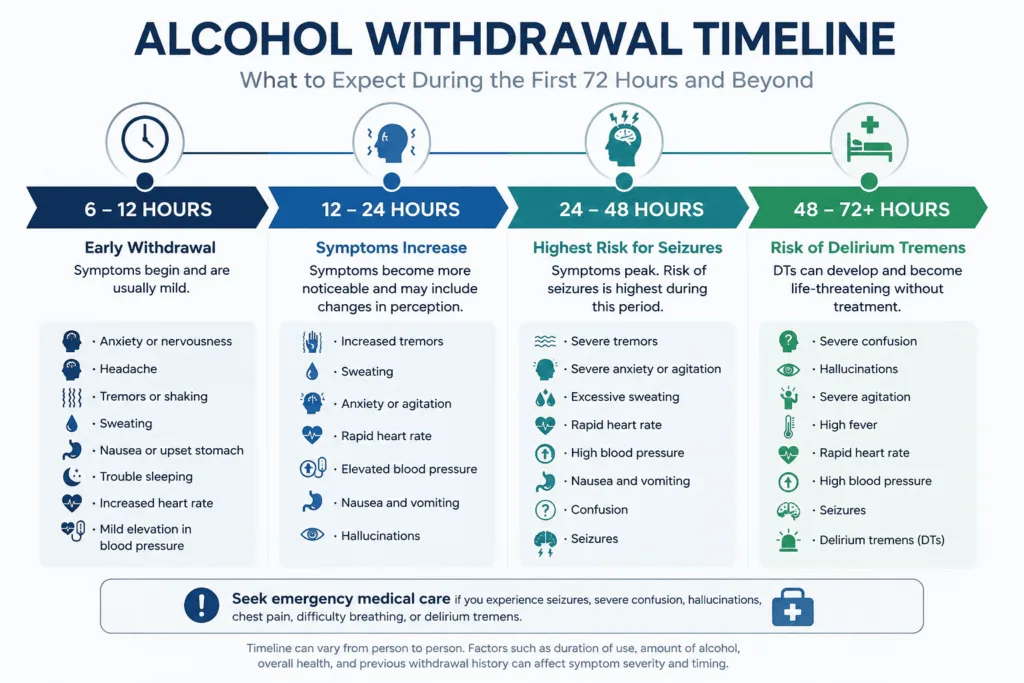
The alcohol withdrawal timeline can vary from person to person, but symptoms generally follow a predictable pattern. Factors such as how long someone has been drinking, how much alcohol they typically consume, their overall health, and whether they have experienced withdrawal before can all influence the severity and duration of symptoms.
While some people experience mild withdrawal that improves within a few days, others may develop serious complications that require emergency medical care. Understanding what typically happens during each stage can help you recognize when it’s time to seek medical attention.
6 to 12 Hours After the Last Drink
For many people, the earliest symptoms of alcohol withdrawal begin within 6 to 12 hours after their last alcoholic drink. During this stage, symptoms are usually mild but may become progressively more noticeable as the body adjusts to the absence of alcohol.
Common early symptoms include:
- Anxiety or nervousness
- Headache
- Tremors or shaking
- Sweating
- Nausea or upset stomach
- Difficulty sleeping (insomnia)
- Increased heart rate
- Mild elevations in blood pressure
Although these symptoms may seem manageable, they should not be ignored. Early withdrawal can progress quickly, particularly in people who have been drinking heavily for a long time. Healthcare providers may recommend medical evaluation during this stage to assess the risk of more severe withdrawal.
12 to 24 Hours After the Last Drink
As withdrawal continues, symptoms may become more intense. Tremors, sweating, anxiety, and rapid heart rate often worsen, and some people begin experiencing changes in perception.
During this period, some individuals may develop alcohol-related hallucinations, which can involve seeing, hearing, or feeling things that are not actually present. Unlike delirium tremens, many people remain aware of their surroundings despite these hallucinations.
Because withdrawal symptoms can escalate rapidly, anyone experiencing worsening confusion, hallucinations, severe vomiting, or significant changes in vital signs should seek immediate medical care. Early treatment can reduce the risk of more serious complications later in the withdrawal process.
24 to 48 Hours After the Last Drink
Between 24 and 48 hours after the last drink, withdrawal symptoms often reach their highest intensity for many people. While individuals with mild withdrawal may begin to stabilize during this period, those with moderate to severe withdrawal remain at risk for serious complications.
One of the greatest concerns during this stage is the increased risk of alcohol withdrawal seizures. According to Cleveland Clinic, seizures most commonly occur within 24 to 48 hours after alcohol cessation. In many cases, they happen without much warning and can occur even if earlier withdrawal symptoms appeared relatively mild.
Symptoms during this stage may include:
- More pronounced tremors
- Severe anxiety or agitation
- Excessive sweating
- Rapid heart rate
- Elevated blood pressure
- Nausea and vomiting
- Confusion
- Alcohol withdrawal seizures
A history of previous withdrawal seizures, prolonged heavy alcohol use, older age, liver disease, dehydration, or certain medical conditions may increase the risk of severe withdrawal. Because it is difficult to predict who will develop complications, healthcare providers often recommend close monitoring during this period, particularly for individuals with alcohol use disorder or a history of withdrawal.
48 to 72 Hours After the Last Drink
The period between 48 and 72 hours after the last drink is when the most serious complication of alcohol withdrawal—delirium tremens (DTs)—may develop.
Delirium tremens is a medical emergency characterized by severe confusion, disorientation, agitation, hallucinations, and significant changes in the body’s vital functions. Some people may also develop fever, heavy sweating, dangerously high blood pressure, or a rapid heart rate. Without prompt medical treatment, DTs can become life-threatening.
Seek emergency medical care immediately if you or someone else experiences:
- Severe confusion or inability to recognize familiar people or places
- Hallucinations accompanied by agitation or disorientation
- Seizures
- Difficulty staying awake or responding normally
- Severe shaking that continues to worsen
- Chest pain or difficulty breathing
Although only a small percentage of people with alcohol withdrawal develop delirium tremens, the condition requires immediate hospital treatment and continuous monitoring. Early medical care greatly improves outcomes and helps prevent potentially life-threatening complications.
What Factors Affect the Alcohol Withdrawal Timeline?
Although there is a general alcohol withdrawal timeline, no two people experience withdrawal exactly the same way. Some individuals have mild symptoms that improve within a few days, while others develop severe complications that require hospitalization. Several factors influence how quickly symptoms appear, how intense they become, and how long they last.
Duration and Amount of Alcohol Use
People who have consumed large amounts of alcohol over a long period are generally more likely to experience significant withdrawal symptoms. Long-term heavy drinking allows the brain and nervous system to adapt to alcohol’s presence, making it more difficult for the body to regain balance after drinking stops.
Previous Withdrawal Episodes
A history of alcohol withdrawal can increase the likelihood of experiencing severe symptoms during future attempts to quit. Individuals who have previously experienced seizures or delirium tremens may have a greater risk of developing these complications again and should seek medical supervision before stopping alcohol use.
Age and Overall Health
Older adults and people with underlying medical conditions, such as liver disease, heart disease, or other chronic illnesses, may face a higher risk of severe withdrawal. Poor nutrition, dehydration, and electrolyte imbalances can also make symptoms more difficult to manage and increase the likelihood of complications.
Mental Health and Other Substance Use
Coexisting mental health conditions, including anxiety and depression, may become more noticeable during withdrawal. In addition, using other substances or certain medications alongside alcohol can affect the withdrawal process and may require a different treatment approach.
Because it’s impossible to predict exactly how withdrawal will progress, healthcare providers recommend seeking medical evaluation before attempting to stop alcohol after prolonged heavy use. Early assessment helps determine the safest treatment plan and reduces the risk of serious complications.
When Is Alcohol Withdrawal an Emergency?
Alcohol withdrawal should never be ignored, especially when symptoms become severe. While mild symptoms such as headache, sweating, or anxiety may improve with appropriate medical care, certain signs require immediate emergency treatment.
Seek emergency medical attention or call 911 right away if you or someone else experiences:
- Seizures
- Hallucinations accompanied by confusion or disorientation
- Delirium tremens (DTs)
- Severe agitation or inability to stay awake
- Chest pain or difficulty breathing
- Persistent vomiting that leads to dehydration
- Extremely high fever or severe shaking
These symptoms may indicate severe alcohol withdrawal, which can become life-threatening without prompt treatment. Receiving emergency medical care allows healthcare providers to closely monitor vital signs, prevent complications, and provide medications that help stabilize the nervous system. Early intervention greatly improves the chances of a safe recovery.
How Is Alcohol Withdrawal Treated?
Treatment for alcohol withdrawal depends on how severe the symptoms are and whether a person is at risk for complications. While mild withdrawal may sometimes be managed on an outpatient basis under close medical supervision, moderate to severe withdrawal often requires treatment in a hospital where healthcare providers can monitor symptoms and respond quickly if complications develop.
The main goals of treatment are to relieve withdrawal symptoms, prevent seizures and delirium tremens, correct dehydration or nutritional deficiencies, and help patients begin long-term recovery from alcohol use disorder.
Medical Evaluation and Monitoring
Healthcare providers begin by reviewing a person’s symptoms, alcohol use history, and overall medical condition. They may perform a physical examination and order tests such as blood work, an electrocardiogram (ECG), or other assessments to identify dehydration, electrolyte imbalances, liver problems, heart issues, or other conditions that could affect treatment.
Many healthcare facilities also use standardized assessment tools, such as the Clinical Institute Withdrawal Assessment for Alcohol (CIWA-Ar), to monitor symptom severity and guide treatment decisions.
Medications to Manage Withdrawal Symptoms
Medication is often an important part of treatment, particularly for moderate or severe alcohol withdrawal.
Healthcare providers commonly prescribe benzodiazepines because they reduce withdrawal symptoms and significantly lower the risk of seizures and delirium tremens. Depending on an individual’s condition, additional medications may be used to help control symptoms such as elevated blood pressure, rapid heart rate, nausea, or alcohol cravings. Supportive treatments, including intravenous (IV) fluids, electrolyte replacement, and thiamine (vitamin B1) supplementation, may also be necessary to address dehydration and reduce the risk of alcohol-related neurological complications.
Treatment Beyond Withdrawal
Managing withdrawal is only the first step in recovery. After withdrawal symptoms have stabilized, healthcare providers typically recommend ongoing treatment for alcohol use disorder to help reduce the risk of relapse.
Long-term recovery may include behavioral therapy, counseling, support groups, medication-assisted treatment when appropriate, and personalized care plans that address both physical and mental health needs. Professional follow-up care can help individuals build healthier coping strategies and support lasting recovery.
Recovery Starts With the Right Support
Alcohol withdrawal can become serious very quickly, and attempting to quit alcohol without medical guidance may increase the risk of dangerous complications. Seeking professional care can help ensure a safer withdrawal process while providing the support needed for long-term recovery.
If you or someone you love is struggling with alcohol dependence, DevotedDOc offers compassionate, evidence-based alcohol use disorder treatment tailored to each individual’s needs. Schedule a telehealth visit with one of our healthcare providers to discuss your symptoms, explore your treatment options, and take the first step toward a safer, healthier recovery.